For busy dads & professionals

Not sure
how much to eat?

Put your info below and let’s figure out where to start. You’ll get daily calorie and macro targets, plus a few easy meals to try.

Free calculatorAbout 60 secondsSimple food guide

Let’s figure it out.

Fill this out based on what a normal week looks like for you.

Used by the calorie formula. More information is under How the estimate works.
feet
inches
Not sure which activity level fits? Answer these.

Think about your whole week, not just your gym sessions.

Count purposeful workouts. Don’t count a walk again if it’s already included in your daily steps. Workout intensity and individual needs can still change the estimate.

Days mean workouts per week. These are examples, not requirements. Your job and daily steps count too. Between two levels? Start with the lower one.

Recommended uses a little more protein for fat loss or muscle gain. Higher protein leaves less room for carbs.

Already know your maintenance calories? + more options

Use an estimate supported by several weeks of complete food logs and weight trends, or an established expenditure estimate from an app such as MacroFactor. Don’t enter your fat-loss calorie target. Leave blank if you’re unsure.

Calories and protein stay the same. Choose what makes your meals easier to stick with.

For fat loss when you have substantial weight to lose: an agreed goal weight can make protein planning more practical. This changes protein only; calorie estimates still use your current weight. Leave blank unless you have a realistic goal weight to use.

Your measurements stay in this browser. No account needed.

YOUR FIRST STEP

Here’s what you’ll get.

Your calories and macros will show up here, along with a few things you can do tomorrow.

Daily caloriesYour energy target
Protein, carbs & fatsYour daily split
What to do nextA practical first day

Your next step · Free PDF

Okay, now what do I eat?

The guide shows you how to use your numbers, put meals together, and check whether your plan is working.

Grab the free guide ↓

A few easy meals to get you started.

Nothing complicated. Pick one you’d actually eat, check the portions, and see how it fits your numbers.

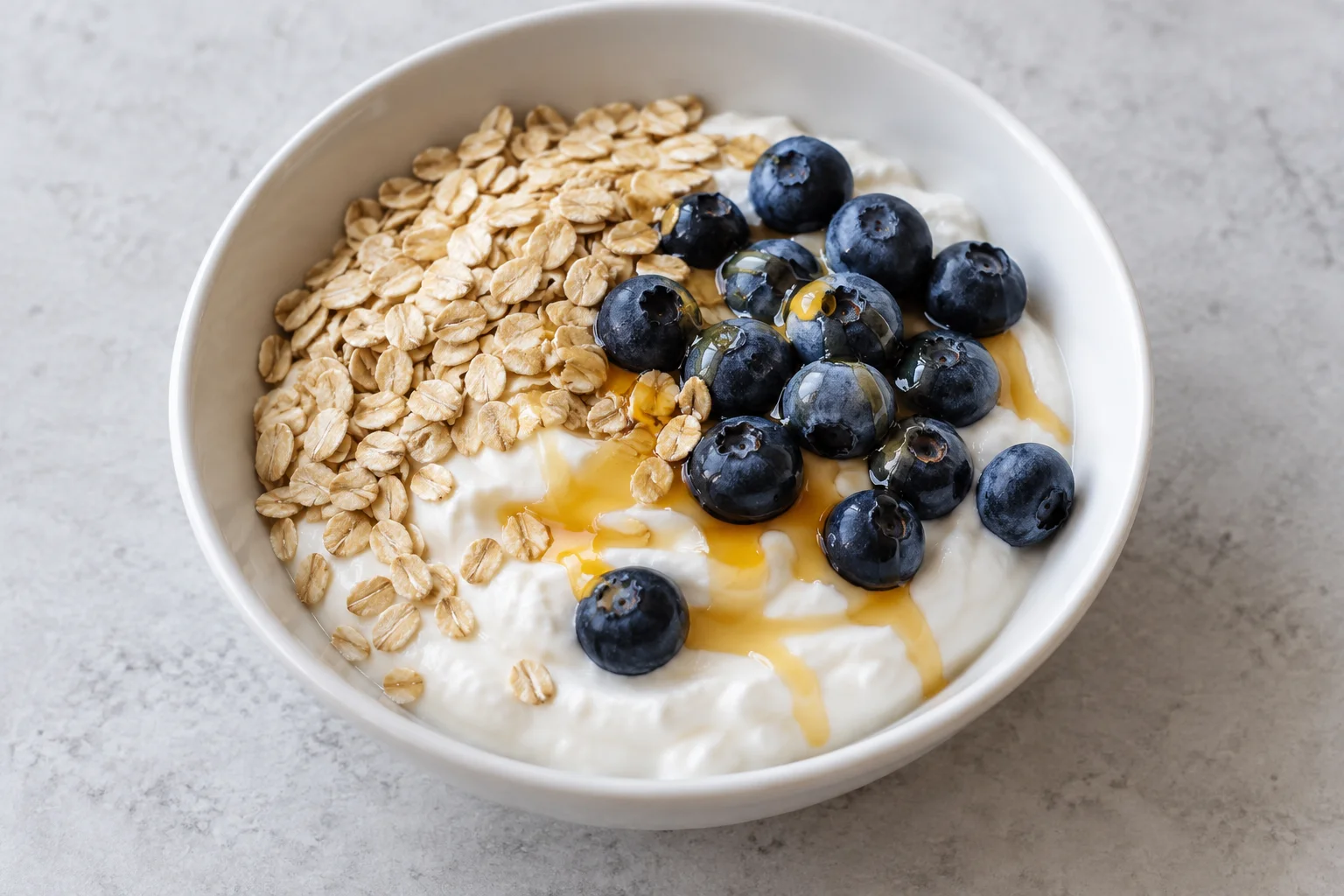
Greek yogurt topped with oats, blueberries, and honey
BREAKFAST · NO COOKING

Greek yogurt & oats

≈ 380 calories / serving
33g protein56g carbs4g fats
What you need + how to make it
  • 250g plain nonfat Greek yogurt
  • 40g dry rolled oats (about ½ cup)
  • 100g blueberries (about ⅔ cup)
  • 7g honey (about 1 tsp)

Stir the oats into the yogurt, then add the berries and honey. Leave it in the fridge overnight if you like softer oats.
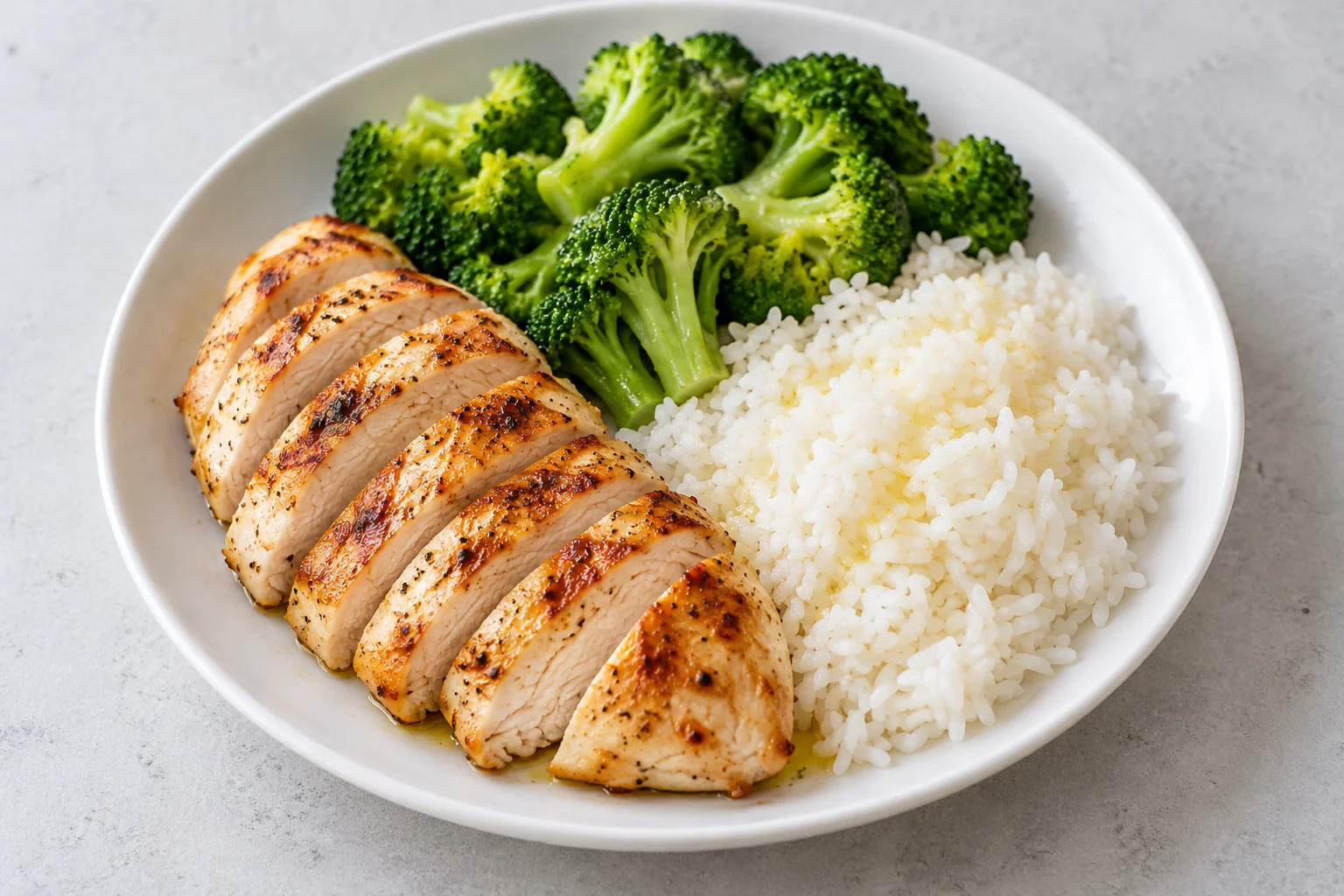
Sliced chicken breast with white rice and broccoli
LUNCH · EASY TO PACK

Chicken, rice & broccoli

≈ 520 calories / serving
53g protein49g carbs11g fats
What you need + how to make it
  • 150g cooked skinless chicken breast (5.3 oz)
  • 150g cooked white rice (about 1 cup)
  • 100g cooked broccoli (about ⅔ cup)
  • 1 tsp olive oil (4.5g)

Use already-cooked chicken and rice. Add the broccoli and drizzle the measured oil over the plate. Season how you like.

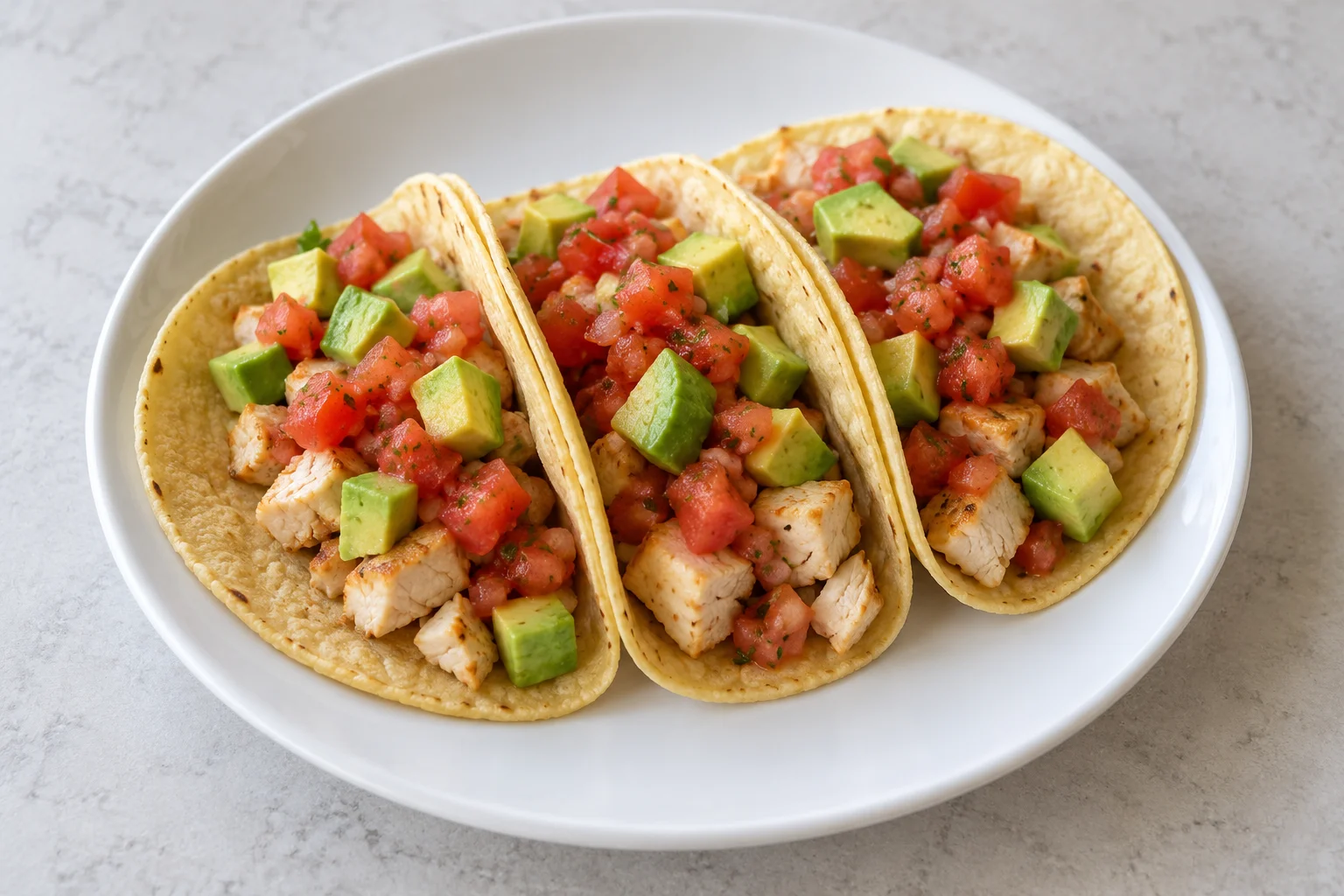
Three corn tortilla tacos filled with chicken, avocado, and tomato salsa
DINNER · YES, TACOS

Chicken & avocado tacos

≈ 450 calories / serving
43g protein40g carbs14g fats
What you need + how to make it
  • 3 small corn tortillas (24g each)
  • 120g cooked skinless chicken breast (4.2 oz)
  • 50g avocado, flesh only
  • 60g tomato salsa

Warm the tortillas in a dry pan. Split the cooked chicken, avocado, and salsa between all three. Macros are for the whole plate.

Estimates per serving, based on the listed portions. Brands, extra toppings, and cooking methods can change the totals. Chicken, rice, and broccoli are weighed after cooking; oats are weighed dry. AI-generated photos illustrate the meals.

Where the meal numbers come from

Ingredient amounts are added together, then calories are rounded to the nearest 10 and macros to whole grams. Nutrition databases use food-specific energy calculations, so calories may differ slightly from multiplying the rounded macros by 4/4/9.

USDA-reference nutrition entries: Greek yogurt, oats, blueberries, honey, chicken breast, rice, broccoli, olive oil, corn tortillas, avocado, and salsa. Use your package labels for the products you buy.

Want some help with this?

Send me your numbers and tell me what you’re struggling with. We’ll figure out if coaching makes sense for you.

Do I have to hit every number exactly?

Use the targets as a planning guide. Aim for a repeatable routine; one meal or one day does not tell the whole story. Start by understanding your overall calorie intake and including protein across the day.

How should I choose my activity level?

Mostly seated · 0–1 days/week: little exercise and most of the day sitting.
Light · 1–3 days/week: some workouts or walking, with a mostly seated day.
Moderate · 3–5 days/week: regular workouts plus walking, or an active workday on your feet.
Very active · 5–7 days/week: frequent hard training with an active day, or demanding physical work.

Workouts are only part of the picture. Choose the lower level when unsure, then review the estimate against your actual trend.

How the estimate works + sources

We use the Mifflin-St Jeor resting energy equation: 10 × kg + 6.25 × cm − 5 × age, plus 5 for the male equation or minus 161 for the female equation. Activity multipliers (1.2, 1.375, 1.55, 1.725) are practical estimates, not measured energy expenditure.

CYG starting settings: fat loss = 15% below estimated maintenance; muscle gain = 5% above; protein = 1.8 g/kg for fat loss or muscle gain, or 1.6 g/kg for maintenance, with selectable 1.6 and 2.0 g/kg options; fats = 25%, 30%, or 35% of calories; carbs = the remaining calories. An optional protein planning weight can be used during fat loss at BMI 30 or above; it must be below current weight and at least BMI 18.5. This is a practical CYG planning option, not a validated prediction of protein needs. An established maintenance estimate, when entered, replaces the formula-derived maintenance value. The activity helper maps answers to the same four multipliers using a CYG rule of thumb: job and step levels overlap rather than being added together, and longer, more frequent workouts can raise the suggested band. This helper is not a validated energy-expenditure equation. These choices are a starting framework, not universal optimal targets. Protein is aimed at generally healthy, exercising adults; larger bodies, older adults, and clinical needs can require individual planning. The tool declines targets below 1,500 calories for the male equation or 1,200 for the female equation; these are tool guardrails, not personal minimum requirements.

Mifflin & colleagues, 1990 · ISSN protein position stand, 2017 · NIDDK Body Weight Planner